

- Can you introduce yourself and explain how sustainability became a core part of your life?
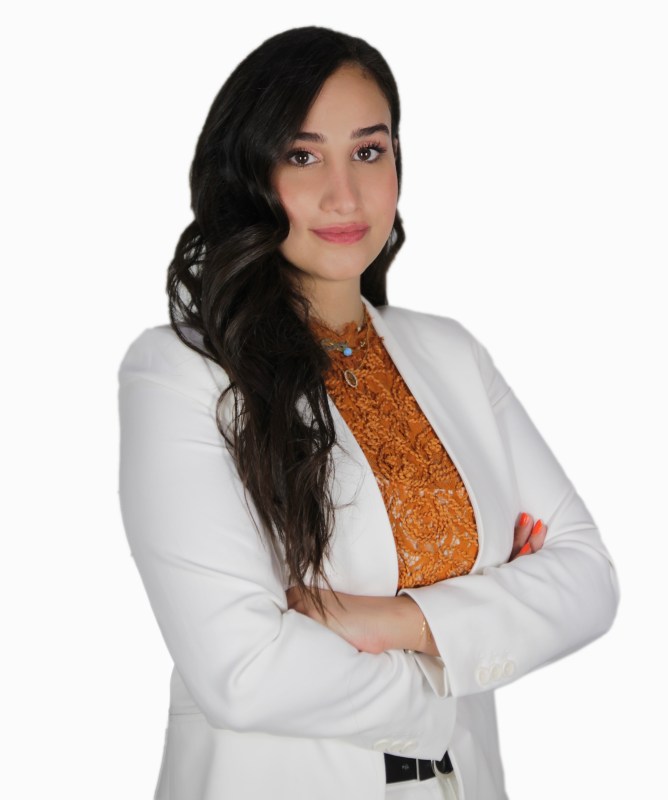
First and foremost, I am an Energy Warrior. And above all of that, I am human who simply wants to live in a just, healthy and sustainable world.
Passionately and professionally, I am a sustainability and energy management expert with deep expertise in energy efficiency, building retrofits, renewable energy, carbon accounting, carbon markets, ESG, and sustainability strategy. I help organizations to decarbonize operations, enhance resource efficiency, and achieve ambitious sustainability goals.
How it all started? That’s one interesting story. I come from a very small town in the valley of West Bekaa, Lebanon. I studied mechanical engineering and was the first woman in my town to study this field. Back then in university, we didn’t have any courses on anything related to renewable energy, but we had a lot about optimizing efficiency of systems, so energy efficiency was my passion since university. Always trying to enhance plants and systems, and then this got translated in practical implementation as a project engineer on site. Then I worked in a solar company and was one of the very first pioneers installing solar in Lebanon. And here where it all made sense: energy efficiency + solar = maximizing potential of savings. Growing up in a town where we had almost zero grid and relying heavily on costly, noisy and terribly polluting diesel generators was the turning point. I decided to dedicate my career path in energy efficiency and green energy combined together, and I started from my very own home.
- How do you keep yourself updated on the latest information and developments in climate change and sustainability?
Curiosity is my daily ritual. I set aside time every week to scan technical briefs and standards and latest innovations, policies and regulations globally and regionally. I also learn by doing: testing new methods on real data, comparing outcomes, and sharing what holds up.
I have a very funny yet powerful rule. My rule: if I can’t explain a new concept to a non-engineer in two minutes, I don’t “know” it yet. Believe it’s not an easy skill. I surround myself with people who challenge me, mentors, peers, and seasoned practitioners. I attend and speak at many industry conferences globally. What works in Europe often needs to be re-engineered for MENA’s heat and infrastructure for example. It all comes to seeking knowledge every day. And I am very open to learning, when I don’t know something, I do not pretend knowing it, instead I read, research and ask to get to know it.
PS: I am really good at what I do 😀
- Which Sustainable Development Goal (SDG) do you resonate with the most, and why?
All 17 matter to me, but my daily work lives at the intersection of SDG 5 (Gender Equality) and SDG 7 (Affordable & Clean Energy): the “Who” and the “How” of the transition.
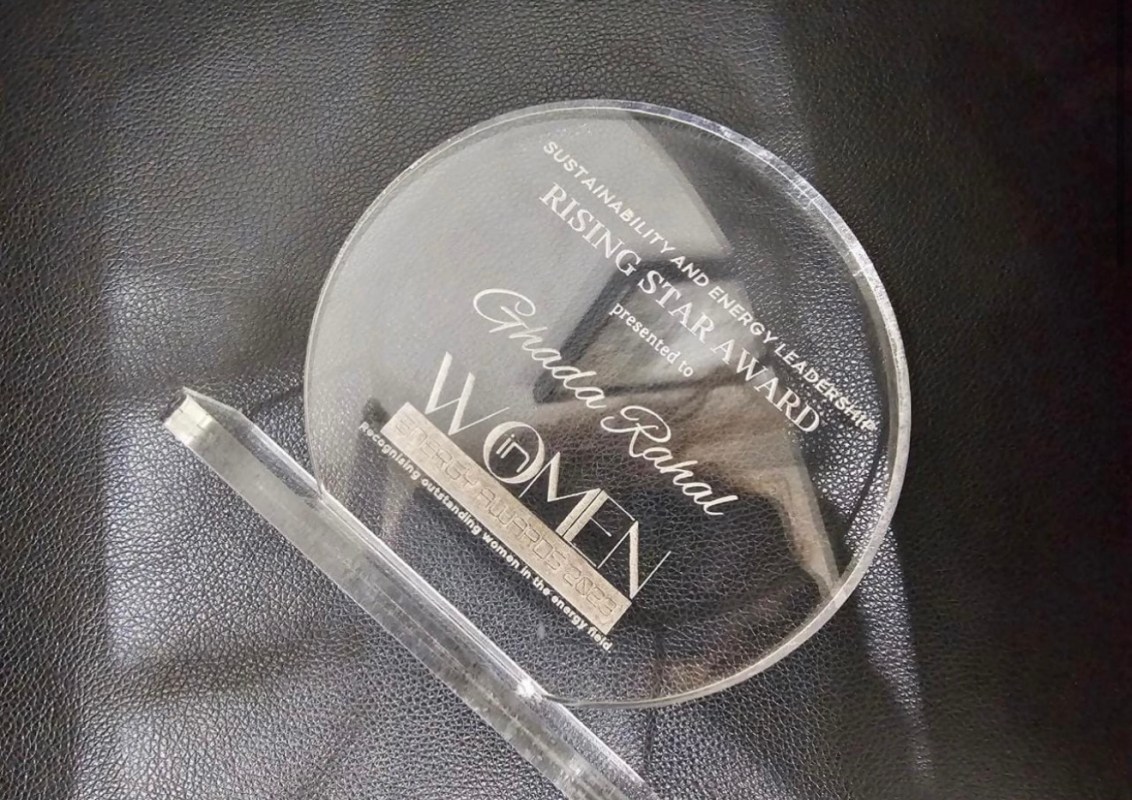
SDG 5: Gender Equality: I’m proud to be a woman in energy and STEM, and I work to widen the door behind me by mentoring young engineers, speaking openly about career paths, and designing practical entry points for women into technical roles. Representation isn’t a just a buzz word. It’s how better decisions get made in plant rooms, board rooms, and classrooms.
SDG 7: Affordable & Clean Energy: Growing up with unreliable power taught me that energy is dignity. Today, I focus on solutions that work in hot, fast-growing cities: efficient cooling, rooftop solar that does real work, and primary-data MRV so every kilowatt-hour is measurable and manageable. Clean energy should be reliable, cost-aware, and audit-ready.
Together, SDG 5 and SDG 7 are about power: who gets to shape it, and how we deliver it fairly.
I believe in humanizing energy. Energy is dignity, and women belong at every table where it’s designed, financed, and delivered.
- What are your thoughts on climate change and the four key categories of individual emissions? How do you calculate your individual emissions?
Climate change is global, but we live it locally, in our bills, buildings, and in MENA, in the heat!
Home energy: I believe I am one of few who actually look and analyze their electricity and water bill. Simple actions like setting AC between 22C and 24C, using LED lights and of course relying on natural sunlight during the day, plugging off electronics loads when not using them. Believe these small things make a difference.
Transport: Carpooling whenever it’s possible, and using public transportation when I travel. I always tend to be a responsible traveler, and I spread awareness regarding sustainable travel.
Food: I put effort to cut waste as much as I can. It’s not an easy habit in our culture, but it is very important.
Consumption: I am a person who prefers quality over quantity. Buy less and buy better! I read description on items I buy and tend to see if they have a sustainability certificate. Also, Recycle, recycle, recycle.
- What innovations or unique practices have you introduced in your daily life that have helped reduce your environmental footprint?
I’ll list for you very simple actions that you might find basic, but they have major impact:
- I have very cool coffee mugs and water bottles. Why use plastic when you can have iconic items. Reuse, reuse, reuse.
- Recycle at my residential building.
- Donate old clothes and unused items for people in need. There are several organizations doing it.
- Set my AC at 22C – 24C.
- Mindful shopping: quality or quantity, and support sustainable items.
- Switching off electronics when not in use.
- Rely on natural sunlight during the day.
- Take a walk when you can! Why using a car for small trips? Boost your health and save the environment.
- I don’t use paper business cards. Digital all the way.

- In what ways do you balance sustainability with your personal or professional goals?
For me, sustainability is a mindset, not a trade-off. It’s the lens I use to design my day and my work. Sustainability is often used as trend or buzz word, and many times as a PR tool. But it’s actually the complete opposite. Our ancestors have lived sustainably for centuries, and luxury should not go in opposite ways with sustainable development. All the simple daily practices I told you about earlier are part of my personal and professional life. I consider myself lucky because I have the awareness and I have the power for the solutions. The same mindset that guides my personal life guides my projects. When sustainability lives in your habits and choices, it fuels growth instead of fighting it.
- Could you share a particularly challenging moment you faced while pursuing sustainability and how you overcame it?
Earlier in my career, I had a project to cut building energy use, fast, and with no capex. Client wanted results and operations feared disruption. Instead of pushing a slide deck, I spent time with the technicians on site. We found AHUs left on for empty zones, VFDs stuck in manual, and a chiller sequence that never reset after a summer peak. Together we fixed schedules, fixed setpoints, adjusted sequencing and pulled a zero-capex plan for energy savings The lesson: measure first because what you can’t measure you can’t control, and simple changes can lead to massive impacts.
- What causes are you most passionate about, and how do you actively contribute to them?
Give people a tool, not a speech, and watch momentum build. Great speeches and fancy strategies lead to a dead end if they weren’t practical. Climate literacy is a must. Everyone on this planet should know how they contributing to climate change, how they can mitigate climate change and how to adapt to climate change. I work to transform slogans into action, and polices into implementation.
I make sure my voice is heard, and I am a vocal person. I love when young professionals and engineers tell me that I inspire them. This is when I feel that I am turning the tide and mentoring the younger generation to build healthier, greener and more sustainable future. Especially women in STEM fields, where representation is still shy especially in the green energy field. I speak frankly about career paths so more women feel welcome in the technical room, despite of the challenges, and the sexism we may face.
- How do you involve your friends, family, or community in your sustainability efforts?
Everyone around me knows I’m all-in on this work. I’ve learned that when passion meets knowledge, and you give people the power to act, momentum becomes unstoppable. We installed a rooftop solar system at our home in Lebanon, and now my whole family are “energy managers.” My mom sets the energy plan and we all follow it, she’s our unofficial chief energy engineer. Seeing my inner circle turn awareness into daily habits makes me proud. It’s proof that sustainable living starts at home and radiates outward.
- As you move forward, what new sustainability goals do you have in mind for the future?
In the years ahead, my north star is Humanizing Energy: making power personal. For me, energy isn’t just megawatts and targets. It’s comfort on a hot day, time back for families, safer streets at night, dignity at work, and opportunity unlocked. I will center people in every decision: co-design with communities, measure well-being alongside carbon, elevate affordability and access, and insist that the transition is inclusive by design, especially for women and young talent. I’ll tell stories that move hearts, not just chart, mentor generously, and use every platform to widen the circle of who benefits. Because the energy transition isn’t a technical project, it’s a human project. If we keep people as the primary part of the equation, we won’t just reduce emissions, we’ll raise lives.