

Can you briefly introduce yourself and what you do in sustainability today?
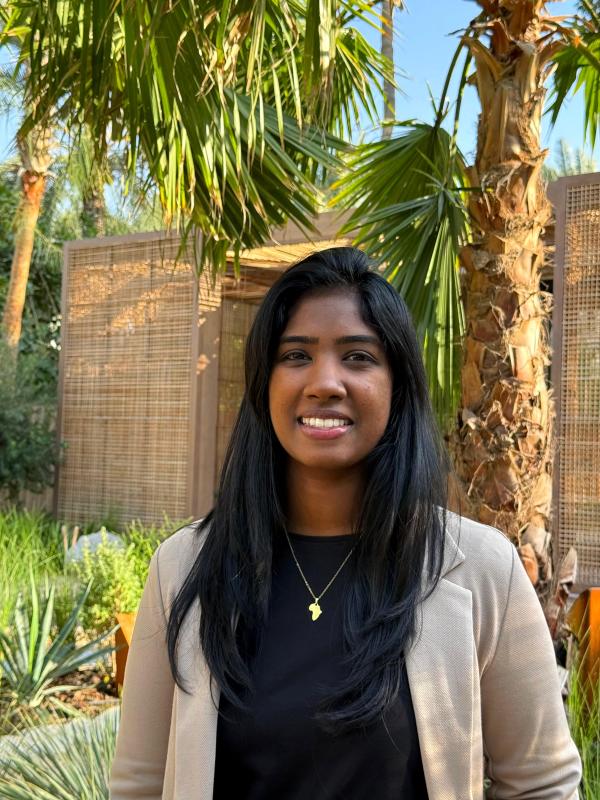
My name is Lizelle Maistry, I’m from South Africa and grew up on the East Coast in an area called Durban. I was raised in a nature- loving home with both my parents being adventurous, so many family vacations were spent outdoors exploring. This is where my curiosity sparked and I knew I wanted to spend my days outside learning about the natural world.
Now I’m an environmental scientist and sustainability professional currently heading up Jumeirah’s flagship sustainability initiative, the Eco Village, where I focus on sustainability operations, environmental education, and creating meaningful nature-based experiences.
My work combines science, storytelling, and project management. I spend a lot of time thinking about how to make sustainability feel more human and relatable, rather than something people only associate with reports and targets. Whether it’s through exhibitions, workshops, biodiversity projects, or immersive experiences, I enjoy helping people reconnect with the natural world in a more tangible way.
I’m particularly passionate about biodiversity and pollinators in the Middle East, and becoming a beekeeper has made that passion even more personal for me. Working closely with bees has completely changed how I see ecosystems, collaboration, and the small but powerful role each species plays in maintaining balance.
How do sustainability priorities change across different projects or communities you work with?
Sustainability priorities can shift quite a lot depending on the community, environment, and even the emotional connection people have to a place. What works in one context can completely miss the mark in another.
In some projects, the focus is operational, like resource efficiency, waste reduction, or long-term environmental performance. In others, especially community-facing projects, the priority becomes awareness, behaviour change, and creating experiences that people genuinely connect with and remember.
I’ve found that sustainability is most effective when it reflects the realities of the people it’s designed for. A solution that looks great on paper but omits considerations for culture, accessibility, or human behaviour usually doesn’t work. Especially in the Middle East, there’s also a growing opportunity to root sustainability more deeply in local ecology, heritage, and regional identity, rather than relying only on sustainability trends.
At the core of it, every project requires you to listen first. The environmental goals may be similar, but the way you communicate and implement them needs to adapt to the people and place you’re working with.
What sustainability challenge feels most urgent in your current work?
One of the biggest challenges I see in my current work is bridging the gap between sustainability as a concept and sustainability as something people genuinely value and engage with in everyday life.
A lot of people care about the environment in principle, but there’s still a disconnect when it comes to understanding how deeply connected we are to ecosystems, biodiversity, food systems, and even our own wellbeing. I think one of the risks in the industry is that sustainability can sometimes become too technical, corporate, or distant from human experience.
For me, that makes environmental education and storytelling incredibly important. If people can emotionally connect to something, whether it’s a native bee species, a landscape, or the story behind where resources come from, they’re much more likely to care about protecting it.
I also think biodiversity deserves far more attention in regional sustainability conversations. Climate discussions are essential, but ecosystem health and species protection often don’t receive the same visibility, despite being just as critical to resilience in the long term.
Which SDG best aligns with your work, and how does it show up in practice?

The SDGs that aligns most closely with my work are probably SGD 14 and 15, Life below water and Life on Land, because so much of what I do revolves around biodiversity and ecosystems on land and in oceans, strengthening people’s relationship with the natural environment.
In practice, that can look very different from day to day. Sometimes it’s developing educational experiences that help people understand local ecosystems in a more engaging way. Other times it’s supporting biodiversity-focused projects, creating spaces that encourage ecological awareness, or finding ways to bring conservation into industries and environments where people may not expect it.
At the same time, I think sustainability works best when the SDGs overlap rather than exist in silos. A biodiversity project can also contribute to education, wellbeing, responsible consumption, and stronger communities. That interconnectedness is something I try to keep front of mind in my work, because environmental challenges rarely exist in isolation.
How do you balance long-term sustainability goals with day-to-day realities?
I think one of the most important things is accepting that sustainability is rarely a perfect process. There’s often tension between long-term environmental goals and the operational realities of budgets, timelines, stakeholder expectations, and human behaviour.
For me, balance comes from focusing on progress that is practical and scalable, rather than chasing perfection from the start. Small shifts that people can consistently maintain usually have a bigger long-term impact than ambitious ideas that are difficult to sustain operationally.
I also try to approach sustainability in a way that feels collaborative rather than restrictive. People are far more open to change when they understand the value behind it and feel included in the process. Sometimes that means adapting the pace, reframing the conversation, or finding creative compromises that still move things in the right direction.
At the end of the day, sustainability is a long game. The challenge is building systems and mindsets that can survive beyond trends, campaigns, or individual projects.
Can you share one project that made a real environmental or social impact?
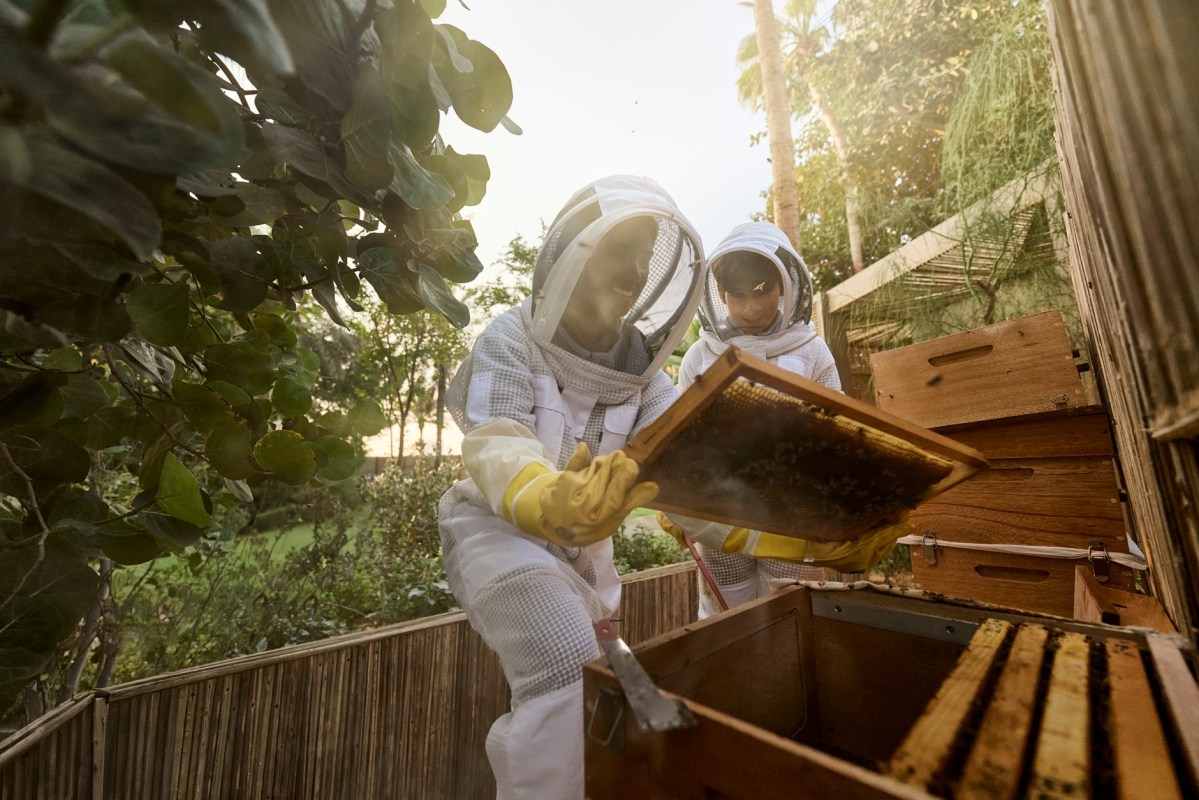
One project that’s been especially meaningful to me has been the development of the bee observation hives inside Jumeirah Eco Village. I set up these observation hives because I thought it was such a shame that others could see what I get to see. Bee live in an extraordinary world and the way to appreciate them is to see it for ourselves.
What made the project impactful wasn’t just the environmental aspect, but the way it created emotional engagement around the native bee species we have here in UAE.
I think one of the strongest indicators of impact is when people leave curious rather than just informed. Children are easily fascinated but the more wholesome part for me was watching adults look on in amazement, some even saying it was the first time they’d seen bees this close or learnt about their behaviour. This feeling of awe and wonder can create ripple effects that are difficult to measure on a spreadsheet but incredibly valuable in the long term.
It also reinforced something I strongly believe in, which is that sustainability spaces don’t always need to feel overly technical or intimidating. Sometimes creating wonder, curiosity, and personal connection is just as important as delivering information.
What common challenges do you face when implementing sustainability initiatives?
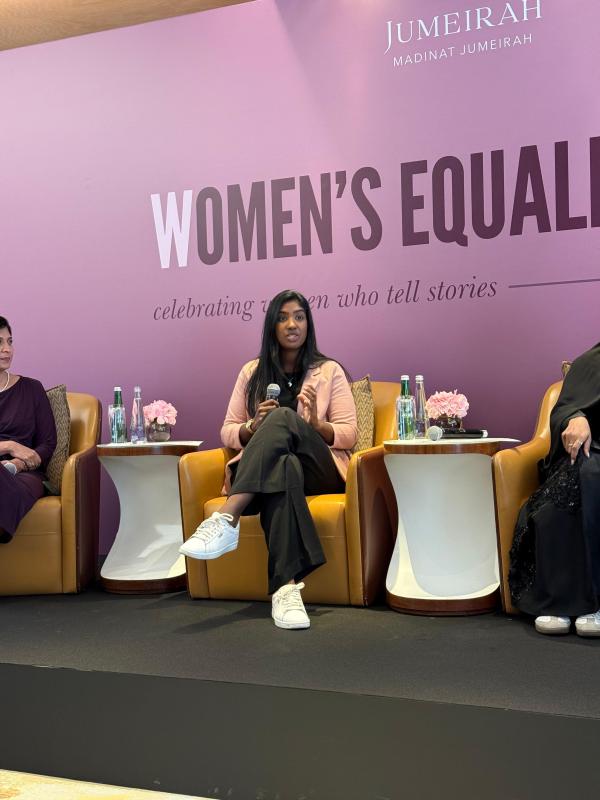
One of the most common challenges is that sustainability often requires long-term thinking in environments that naturally prioritise short-term results. There can be pressure to show immediate outcomes, while many environmental and behavioural changes take time to fully develop and measure.
Another challenge is that sustainability is rarely owned by just one department or person. Successful initiatives usually require collaboration across operations, finance, marketing, leadership, and frontline teams, which means a lot of alignment, communication, and relationship building. Even strong ideas can struggle if people don’t feel connected to the purpose behind them.
I also think there’s still a perception in some spaces that sustainability has to come at the expense of business goals and standard operation, when in reality the most successful projects tend to integrate all of those things together.
And honestly, one of the challenges I’ve struggled most with is avoiding burnout within the industry itself. People working in sustainability care deeply about what they do, but environmental work can be emotionally heavy.
How do you engage others to support and participate in sustainable solutions?
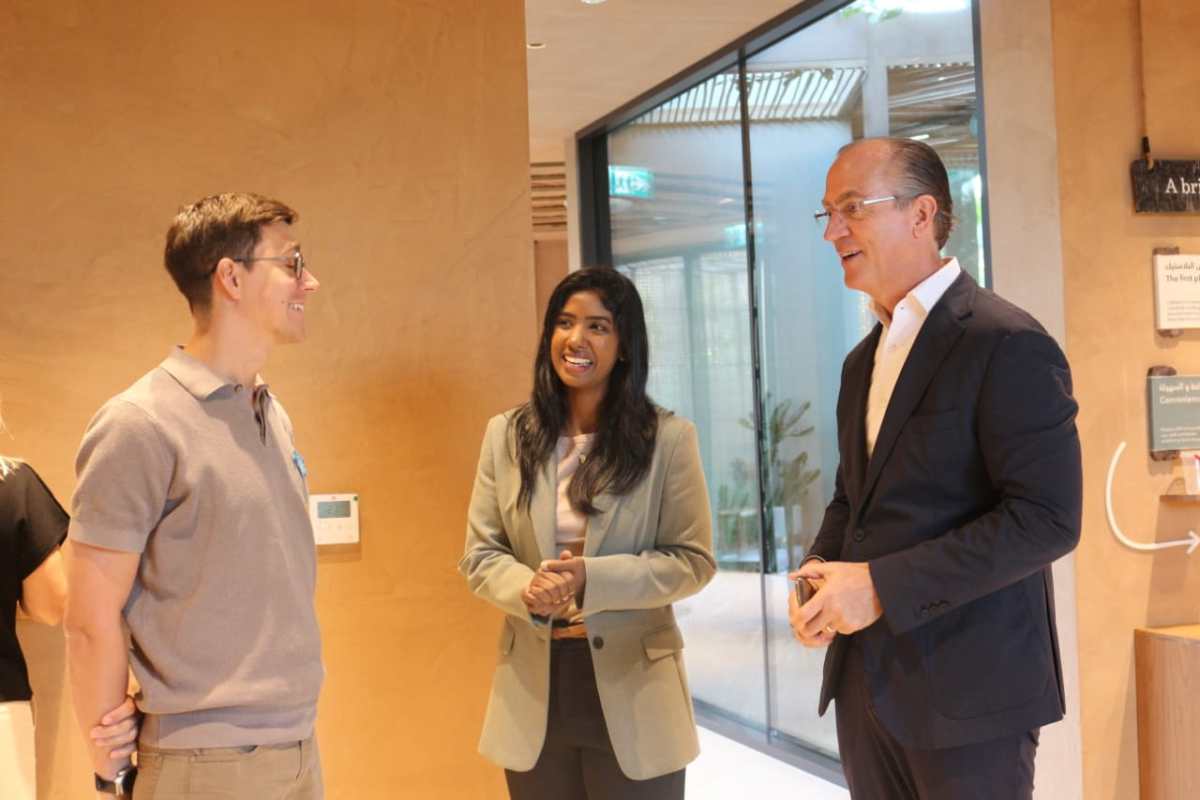
I think people engage more deeply with sustainability when they feel a personal connection to it, rather than feeling like they’re being lectured or overwhelmed with information.
I try to make sustainability feel tangible, relatable, and emotionally engaging. Storytelling plays a huge role in that. Whether it’s through nature-based experiences, interactive learning, or simply sharing the story behind an ecosystem or species, people tend to care more when they can see how sustainability connects to their own lives and experiences.
I’ve also found that curiosity is far more powerful than guilt. Creating moments of wonder, conversation, or discovery often opens the door to much more meaningful engagement than focusing only on fear or responsibility.
At the same time, I think it’s important to meet people where they are. Not everyone enters sustainability conversations with the same background, priorities, or level of awareness, and that’s okay. Real progress usually happens when people feel included in the journey rather than judged for not already knowing everything. We certainly don’t know it all, every day I discover and learn new things about our natural world. It’s sometimes almost upsetting that I will never know about some insects that exist or some interesting behavioural adaptation of a species which I might never uncover.
What current trends give you hope for the future of sustainability?
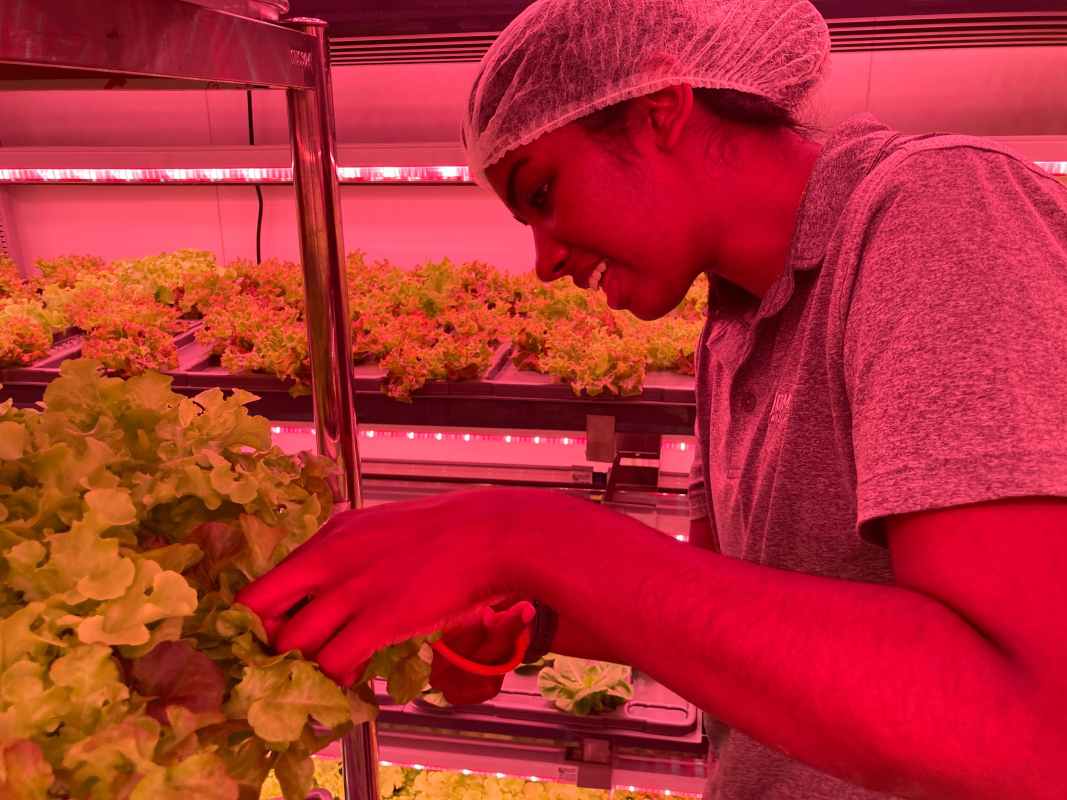
The trend I find most exciting is the rise of nature-based education and citizen science like the Cities in Nature Challenge hosted in April across several environmental organizations. People being invited to actually participate in understanding their environment, seeing things for themselves, discovering and contributing to valuable databases.
I’m also encouraged by how biodiversity is really entering the sustainability conversation in meaningful ways, particularly here in the UAE. For a long time, sustainability in this region meant energy, buildings, water and waste exclusively. The growing interest in pollinator health, native plant restoration, and urban green corridors tells me the conversation is evolving.
Beekeeping has made me an optimist. Bees are extraordinarily sensitive indicators of ecosystem health. When I see colonies thriving or native plants flowering alongside rapid urban development, it gives me hope. It tells me the work is worth doing and that the ecosystems we’re trying to protect are more resilient than we sometimes give them credit for.
What impact are you hoping to create next, professionally or personally?
What I want to create next is more spaces where sustainability conversations can actually happen, in ways that are hands-on and meaningful. Spaces where people are doing something, making something, engaging with a real living system, experimenting with new technology and the conversation grows out of that experience naturally.
I think there is a real gap in this region between sustainability as a professional discipline and sustainability as something communities actively participate in. I want to help close that gap by designing environments and programmes where the doing comes first and the understanding follows. That is where I have seen the most genuine shifts in people, when they are holding something, growing something, or watching something they did not expect to care about.