

Tell us a little about yourself and what sparked your passion for sustainability.
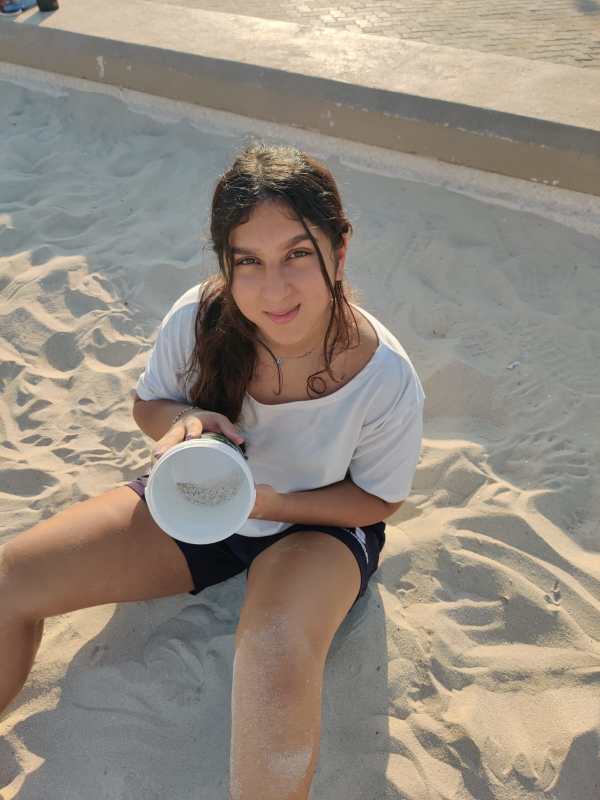
A large part of who I am and what inspired me to pursue sustainability was living in both India and Dubai. Spending four years of my childhood in Delhi, India, not only connected me to my culture but also opened my young eyes to the problems we face, environmentally and socially. I vividly remember looking up at the sky one day and only being able to see a brown, grey, smoggy color. The air quality was so bad that I couldn’t see the sun, much less the road across from me.
While living in Dubai was different, I still noticed the dusty quality of the air and the weather getting hotter each year. For a long time, I thought I wanted to go into politics, but when I took Environmental Science in Grade 11, I realized how deeply it connected to everything I cared about. Policy and science, I learned, are two sides of the same coin.
That connection only grew stronger when I started volunteering with Emirates Nature–WWF. Every native tree I planted, species I recorded, and mangrove I monitored made me realize that environmental science wasn’t just something I cared about; it was something I wanted to live for. That’s when sustainability became more than a passion. It became my purpose.
What motivated you to incorporate eco-friendly practices into your daily life?
In many ways, eco-friendly practices were always part of my life, it just wasn’t called that. At my grandma’s home in India, we were segregating wet and dry waste long before it became policy. Glass jars and bottles were reused for spices or water, cookie tins held sewing kits or craft supplies, and old clothes were torn into cleaning rags or passed down to siblings or cousins. Food was rarely wasted, and lights were switched off the moment we left a room.
These weren’t trends or conscious changes—they were small, conscious habits passed down through generations. I didn’t realize it then, but those choices were my first steps towards sustainability.

Years later, when I began volunteering with Emirates Nature–WWF, those small steps turned into a leap, one filled with purpose and new intention. Fieldwork made every action more tangible. Measuring toads in Wadi Wurayah, capturing species on iNaturalist, or categorizing plastic waste during cleanups showed me how my actions could contribute to something much larger.
That awareness followed me into school, where I saw the potential to create change by educating younger students. I initiated our first Sustainability Week, leading workshops on recycling, organizing a sustainable fashion show, making bottle-cap mosaics, and coordinating a whole-school lights-out day.
Whether it was through Sustainability Week, volunteering, or habits at home, I realized the most powerful thing I could do was help others connect the dots between habit and effort, between culture and conservation. Once you understand that, sustainability stops being a choice; it becomes a way of living. I try to share these lessons through my blog to inspire others to think the same way.
What small, sustainable habit have you introduced that has made the biggest impact on your lifestyle?
For me, it’s been embracing citizen science, not just as a project, but as a conscious effort. It started in Dubai, where weekends meant tracking geckos, analyzing BRUVs footage, and uploading biodiversity observations to iNaturalist. Now, it has become something I try to do every day, whether it is walking on campus and snapping a picture of a species I see for iNaturalist or using CleanSwell to categorize the waste I collect on cleanups.
A completely underrated switch has been walking. It sounds simple, but choosing to walk 20–30 minutes to campus instead of taking a car or an electric scooter has changed how I experience my surroundings. I’ve reduced my emissions, stayed active, and found joy in noticing the little details in the abundant nature around me.
Through Ezra’s Nature Diaries, I’ve been able to share these small shifts and the lessons behind them, helping demonstrate that sustainability doesn’t always start with grand actions, but with consistent choices that connect us more deeply to the environment we live in.
In your opinion, what are the most common barriers people face when trying to live more sustainably?
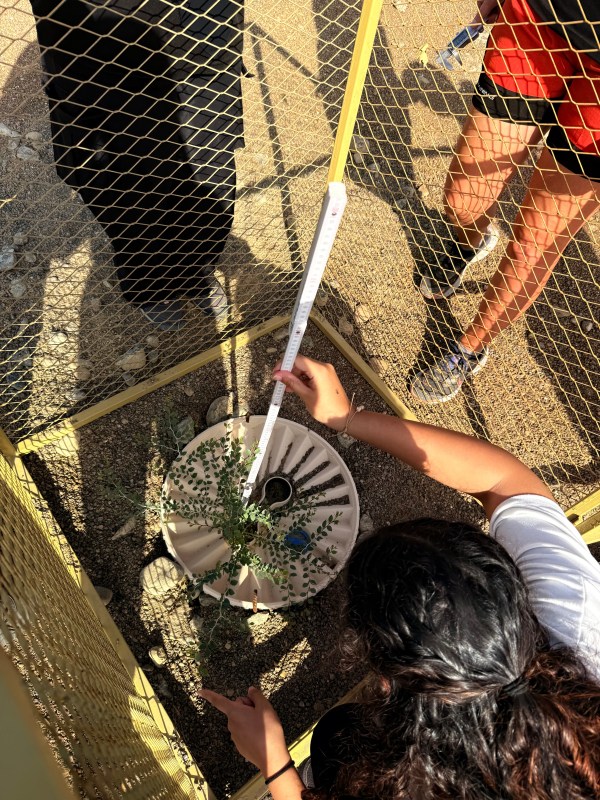
I think one of the biggest barriers is the assumption that small actions don’t matter. That picking up a piece of plastic, or logging an observation on an app, won’t lead to real change. But I’ve seen how those small actions, when documented, shared, and scaled, can become momentum for true change. In the UAE, data from Leaders of Change and community cleanups was uploaded to Clean Swell, and that collective effort helped inform national policy. It contributed to the conversation around single-use plastics and supported the eventual plastic ban.
Another barrier is not knowing where to start. Many people care but don’t act because sustainability can feel overwhelming. But action and advocacy don’t require a platform; they can begin in a classroom, with friends, or at home. From my experience, I’ve learned that leading by example truly does inspire others.
I started by sharing what I was learning with peers, organizing workshops, and designing campaigns that made sustainability feel approachable. One of my most memorable actions was participating in the Emirates Environmental Group’s Neighborhood Recycling Campaign. I was overwhelmed with gratitude when my family, JLT community, and parish came together to collect over 30 kilos of waste– the number may seem small, but it was two trips of a filled-up car boot with paper and plastic! It is just one of many examples of how easy it is to create change; the hardest part is just starting!
That’s what inspired me to start Ezra’s Nature Diaries. I wanted to create a space where I could share my experiences in the field, but also highlight opportunities for youth to get involved, whether through volunteering, citizen science, or creative advocacy. My blog serves as a reminder that there is a place and opportunity for everyone in the field of change-making; you just have to look for it.
What has been the most rewarding moment for you on your sustainability journey so far?

One of the most rewarding moments on my sustainability journey so far has definitely been planning Sustainability Week at my school last year. There were so many setbacks that I honestly thought it might not happen. The historic storm in April last year flooded our campus just days before the launch. Months of planning 21 workshops, guest speakers, and a fashion show were suddenly on hold. But we rebuilt, we rescheduled, and when it finally happened, persevering made it worth the success because that is what it became.
Over 300 students participated. We upcycled 14,000 bottle caps into art, offset 40 kg of CO₂ through a lights-out campaign, and kick-started conversations that continued long after the week ended. What made it truly rewarding wasn’t just the numbers, it was the energy: the questions from younger students, the support from teachers, and the sense that something had shifted.
Apart from that, I try to celebrate every small win. Each time someone comments, follows, or interacts with my blog, that gives me hope that I am inspiring or teaching someone new.
Each opportunity I get, whether a feature article, an invite to an event, or a new program or club to join, is one more step forward in my journey to protect the environment we rely on every day.
Can you share any misconceptions or myths about sustainability that you’ve encountered and would like to debunk?

One of the biggest misconceptions I’ve come across is that change in the sustainability field is largely something that only experts, policymakers, or big companies can really drive. In reality, it starts with the smallest, most personal choices; how we consume, how we connect with nature, and the conversations we have at home or in our communities. As I’ve emphasized before, each of us holds the power to create change; we just have to be brave enough to use it.
Another common myth is that living sustainably means giving things up or making life harder. I’ve found the opposite: it’s about living more intentionally, appreciating what we already have, and finding smarter ways to do things. It doesn’t have to be perfect, it’s more about progress. Every thoughtful action adds up, and that’s something I wish more people realized.
And it’s important for all of us to recognize that sustainability isn’t a passing trend, it’s a necessity, and it is a lifestyle.
How do you stay motivated and continue your commitment to eco-friendly practices, even when faced with challenges?
I stay motivated because I know what’s at stake. Sustainability isn’t just a passion; it’s also a responsibility. And when things get hard, I remind myself that the discomfort I feel is nothing compared to the consequences of inaction. I’ve seen the effects of environmental degradation firsthand, and I’ve also seen how small, collective efforts can lead to true change.
What also keeps me going is the belief that learning and sharing are powerful tools. I’ve learned the most from fieldwork and from the people around me. Every time I discover
something new—whether through research, volunteering, or community work—I think about how I can share it. That’s what led me to start my blog, where I post to make what I learn accessible, to inspire others, and to remind myself (and others) that even when our paths feel uncertain, our purpose stays the same.
Looking ahead, what’s next on your sustainability journey? Are there any new habits or changes you plan to implement?

My biggest focus right now is diving deeper into research. Personally, I try to maximize my impact by engaging in research, advocacy, and volunteering, which I like to call the triangle of change. I’m already involved in volunteering through Leaders of Change and the Cal Wildlife Society, and I focus on advocacy through my blog. But I want to do more with research, and I’m excited to explore that side of environmental science.
I’ve already taken steps by joining UC Berkeley’s SDG Undergraduate Research Group, where I’m part of a committee studying the impact of invasive crawfish in Strawberry Creek. Next semester, I hope to join a lab and challenge myself to build stronger research skills.
Another change I really want to make in my daily life is composting. I’ve spent time learning about it through workshops and research, but I haven’t started yet. I look forward to making it a regular part of my routine.
I also want to grow my blog into a space that connects people through knowledge and opportunity — a bridge between those already working in the field and those just starting to care. There’s incredible power in shared experiences, and I want my platform to help people learn, find opportunities, and take action. Sustainability isn’t just about protecting the planet; it’s about inspiring and empowering people to protect it together.