

1.How does Ehfaaz incorporate circular economy principles into its operations?
Ehfaaz is a circular economy company that focus on closed loop resource recovery. Ehfaaz creates high-value solutions from overlooked waste streams: a multipurpose cleaner from expired shampoos, a degreaser from discarded body lotion, and animal feed and compost from food waste. These innovations stem from in-house R&D, aimed at reducing dependence on virgin materials while solving real waste challenges.
Ehfaaz’s approach has evolved into a wider, mission-driven ecosystem of ten solutions, each focused on regenerating resources. These include:
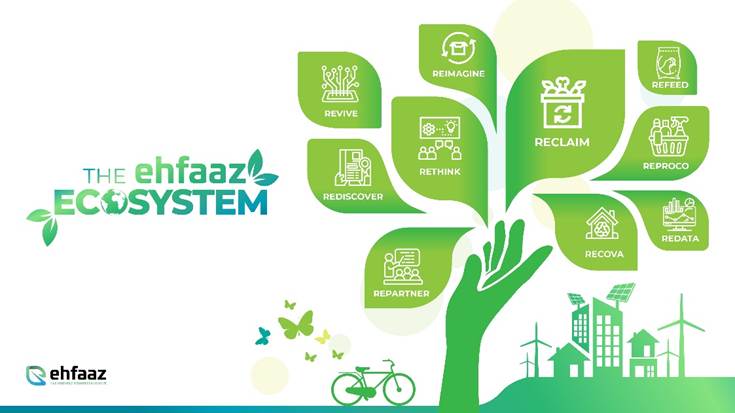
- ReClaim – Secure brand protection
- REPROCO – Resource recovery and product innovation
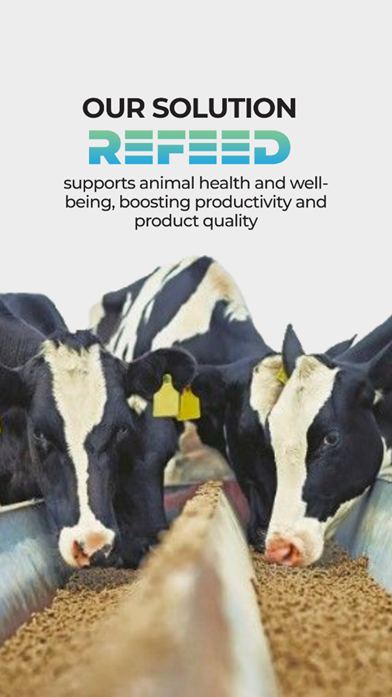
- REFEED – Food waste to animal feed and compost
- RECOVA– Home & office recycling services
- ReImagine – Upcycling and product redesign
- RePartner – Online sustainability learning
- ReThink – Circular economy workshops
- ReData – Data-driven sustainability
- ReVive– Online platform for data-driven insights
- ReDiscover – Immersive tours and workshops for a sustainable future
These services help reshape how communities and companies view waste.
2. Can you walk us through your product or service lifecycle and the steps you take to reduce waste?

Innovation at Ehfaaz begins with what’s already been discarded. The team analyze the waste using each batch as a diagnostic tool.
For instance, when working with manufacturers, they assess production excess to understand why it’s happening. Is it vague demand forecasting? Over-ordering raw materials? By identifying the root cause, Ehfaaz proposes adjustments that minimize future waste, then follows up with resource recovery programs tailored to the business.
The result is a closed-loop recovery cycle that links data, intervention, and design into a circular model.
3. What innovative sustainability practices have you adopted that set your brand apart in your industry?
Ehfaaz’s innovation is embedded into an ecosystem that scales impact through access, education, and practical tools.
With ten integrated solutions, Ehfaaz addresses sustainability across the spectrum. Their e-learning platform RePartner equips individuals and institutions with modular, real-world courses. Services like ReThink offer hands-on workshops that teach circularity by doing. RECOVA brings recycling directly to homes & offices.
Ehfaaz captures data across all services, waste types, diversion rates, behavior patterns to refine their model and help clients understand tangible outcomes.
4. How do you track and evaluate the environmental impact of your business beyond compliance?
Ehfaaz uses a robust data capture system to track impact across operations:
- Material Intake & Recovery: Source, volume, and final use of every resource logged, whether repurposed through REPROCO or redirected via ReFeed.
- Product Lifecycle: Carbon savings, input origins, and disposal scenarios measured against traditional alternatives.
- Operational Metrics: Energy use, material efficiency, and renewable integration.
- Logistics: Route optimization and emissions tracking ensure sustainable logistics.
Insights from this system feed into reports and inform workshops, enabling a feedback loop that improves performance and supports education.

5. How do you educate your customers or clients about the importance of adopting sustainable habits?
Education is embedded in Ehfaaz’s model. Through RePartner, they provide self-paced learning on key topics like waste systems and circular design. Workshops under ReThink bring concepts to life, while mentoring sessions offer hands-on guidance tailored to real-world challenges.
6. What are your thoughts on the costs of sustainable products or services—how do you balance affordability and impact?

Ehfaaz treats sustainability as a value multiplier, not a luxury. Cost-efficiency is built into product design, like using end of life materials to create cleaning solutions. Their data systems demonstrate ROI to clients through savings in procurement, disposal, and energy.
Tiered offerings allow gradual onboarding, while programs like refill models and local partnerships reduce per-unit costs. Education on total cost of ownership ensures clients see the long-term value.
7. Can you share a recent initiative or achievement that exemplifies your commitment to environmental stewardship?
Two standout initiatives illustrate Ehfaaz’s approach:

- Sustainovation Challenge: Participants receive difficult-to-recycle waste samples and co-create solutions after a crash course in circular design. Many outputs have advanced to pilot testing, proving sustainable solutions can be scalable.
- “Food Is Not Waste” Campaign: A hands-on program collecting discarded food from households and SMEs, turning it into compost or feed via ReFeed. Community members are trained to segregate food waste correctly, making impact measurable and replicable.
8. What advice would you give to businesses trying to implement sustainable practices without compromising quality or profitability?

- Start with data. Understand your waste types and volumes. Don’t rely on assumptions.
- Redesign upstream. Eliminate the need for excess inputs before solving output problems.
- Think in loops. Circular systems cut recurring costs and unlock value in waste.
- Scale gradually. Pilot, test, improve, don’t wait for perfection.
- Educate your team. Change only happens when your people believe in the why.
For more, explore ehfaaz.ae or read the Annual Impact Report for deeper insight into ongoing results and goals.