

Can you introduce yourself and explain how sustainability became a core part of your life?

I’m Nour Abu Ghaida, a Palestinian artist and the founder of The Artologist Lab.
My artistic journey began in 2015 with painting. I developed a strong emotional language through color, texture, figures and layered compositions, and over the years I exhibited my work in Italy & UAE and was shortlisted for an International Emerging Artist Award. I also provided art consultancy in Dubai, Jordan and other counties. Art became my way of processing life not only visually, but emotionally. I also explored art therapy practices, helping me to understand how creativity could heal, ground, and empower.
My academic path shaped me just as much as my studio practice.
I earned my Master’s in Art & Culture Management from Rome in 2016 where I learned that art is not just an object on a wall it is a system of values, relationships, ethics, and responsibility. That idea stayed with me and pushed me to rethink and reshape my art path.
Sustainability entered my life slowly, almost unintentionally.
Around 2020, I began experimenting with materials that most people would throw away: broken mirrors, leftover paint, unfinished artwork, paper, threads and much more. I didn’t do it because it was fashionable , I did it because I was tired of creating new art while ignoring the discarded material around me.
Those early works were raw and experimental, but they changed my perspective.
I realized that art is not only creation, it can also be an act of repair.
In 2023, this shift became a vision and later a brand: The Artologist Lab.
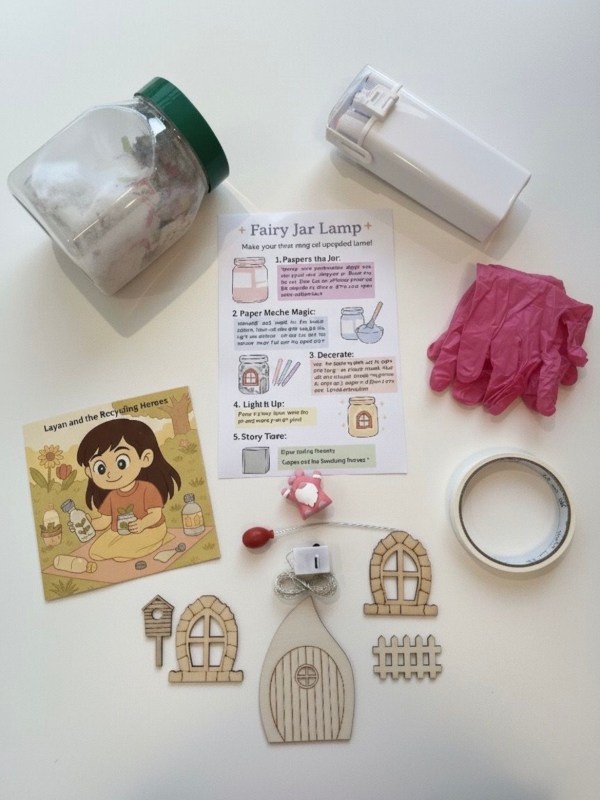
It grew from the belief that sustainability and imagination are not distant concepts they are partners. I began creating functional artworks like floor lamps, table lamps and wall art built from recycled water bottles and paper-mâché, transforming what was considered waste into warm, glowing pieces that could live in real homes. Each lamp was a small reminder that creativity can heal not only people, but materials and spaces as well.
Today, sustainability occupies a wide space in my practice. and I just launched The Artologist first kids kit : (The Fairy House Jar Lamp) where children can transform a plastic jar into a fairy jar lamp, teaching children that creativity doesn’t start with buying new supplies. It starts with noticing what already exists around us.
“I’m still an artist, still someone who believes in art as therapy. I’ve just widened the definition of art to include the forgotten, the broken, and the overlooked, that is where I find meaning now.“
Which Sustainable Development Goal (SDG) do you feel is most frequently represented in your visual narratives, and how do you use imagery to bring attention to it?
The Sustainable Development Goal that appears most consistently in my visual narratives is Responsible Consumption and Production. It’s not because I intentionally set out to represent a goal, but because my work naturally grows from the materials the world leaves behind.
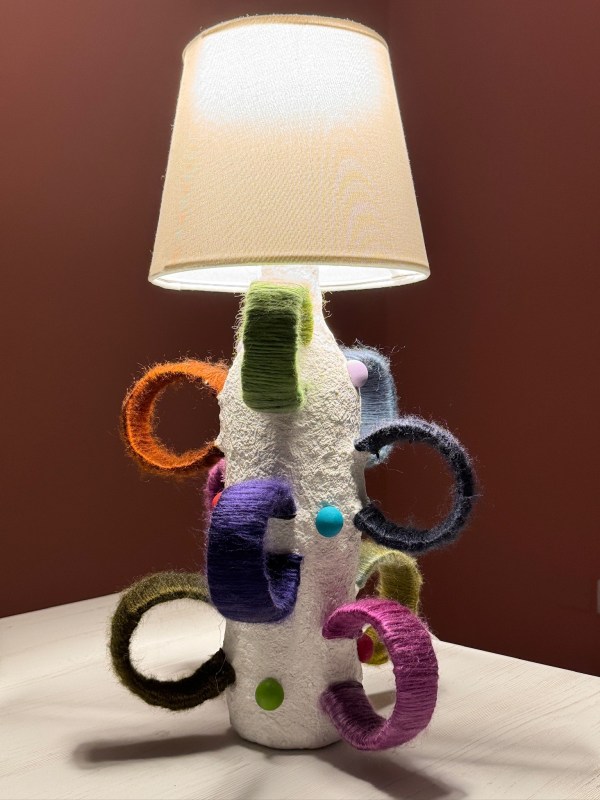
When I design a lamp from recycled water bottles or create a character house from a jar, the visual message is simple: beauty does not require new resources.
I’m showing that discarded objects can have a second life not as a compromise, but as something desirable, warm, and emotionally meaningful. In my visuals, I try to shift the viewer’s relationship with materials.
I don’t photograph them as trash or broken things that need saving. I present them as beginnings: jars that become glowing fairy homes, paper scraps that turn into tactile structures, or wooden offcuts that transform into side tables. By doing this, the viewer sees the potential first, not the waste.
That approach is especially important when I work with children. I use imagery that feels playful, familiar, and safe. When a child sees a used jar become a lamp, they don’t think about recycling policies or environmental statistics they think, I can do this. I can create something magical with what I have.
That emotional response is what responsible consumption and production means to me. It is not about perfection it is about responsibility through possibility. If my visuals inspire a child or a family to keep a jar, reuse cardboard, or think twice before throwing something away, then I know the art is working.
In your process of upcycling, how do you decide which discarded objects have a “soul” worth saving? Is there a specific type of waste you refuse to work with?
In my process of upcycling, I don’t choose materials based on technical qualities first, I choose them based on emotion and possibility.
When I pick up a discarded object, I ask myself some questions: Can I see a future for this? Does it have an artistic potential and would I personally live to have it at my home? If the answer is yes, then it already has a purpose and a posibility to save.
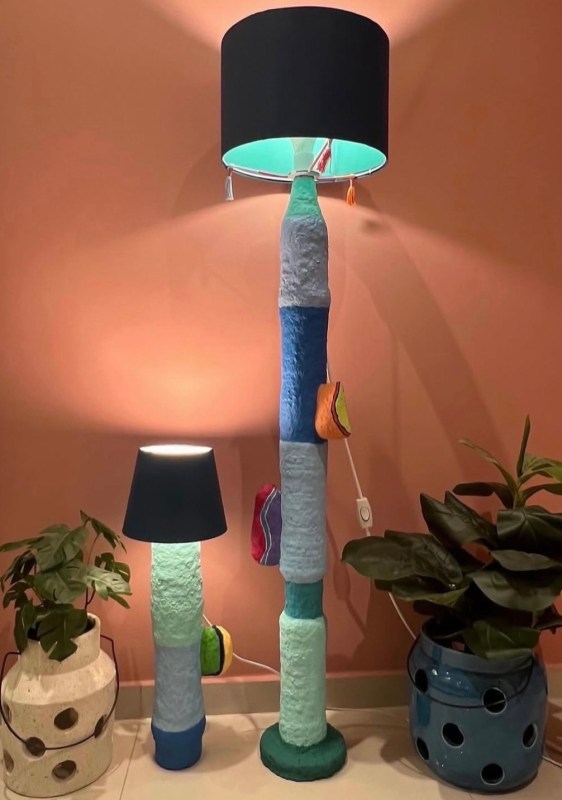
Some materials speak immediately. A jar, a plastic bottle, unfinished artwork, threads, a piece of wood that already feels like it can be transformed to an art piece or home decor item. Even paper scraps, when layered with patience, become strong, warm structures. These objects don’t ask for perfection they ask for imagination. That’s the soul I look for: an object that invites curiosity rather than resistance.
I refuse to save things purely out of guilt. Early on, I made the mistake of collecting everything because it was “recyclable.” My studio became a storage room, and I felt suffocated rather than inspired. Now, I keep only the objects that connect with a story or a design I can commit to over time.
There are also materials I simply don’t work with; Anything unsafe, toxic, or contaminated plastics, sharp glass and harsh chemicals has no place in my practice. My work isn’t about saving every object; it’s about creating meaningful second lives. At the end of the day, I choose the materials that feel alive the moment I hold them.
If an object can become a lamp, a tiny house, a sculptural form, or a moment of wonder for a child or an adult that’s when I know it’s worth the effort of bringing it back to life.
Before starting a new sustainable collection, what does your “fieldwork” look like?
Before starting a new sustainable collection, my fieldwork is very simple. It doesn’t happen in museums or labs it happens in my daily life, in my home studio, in art supplies stores.
I start by paying attention to what keeps showing up around me. If I notice I’m constantly throwing away the same type of jar, the same packaging, or the same cardboard, I don’t ignore it. I start experimenting. When one object repeats itself in my routine, that repetition is usually the seed of a new idea. I also spend a lot of time touching materials. I walk through craft stores and hardware shops, I pick things up, I rotate them in my hands, I imagine how a child would interact with them and what can I transform them to?
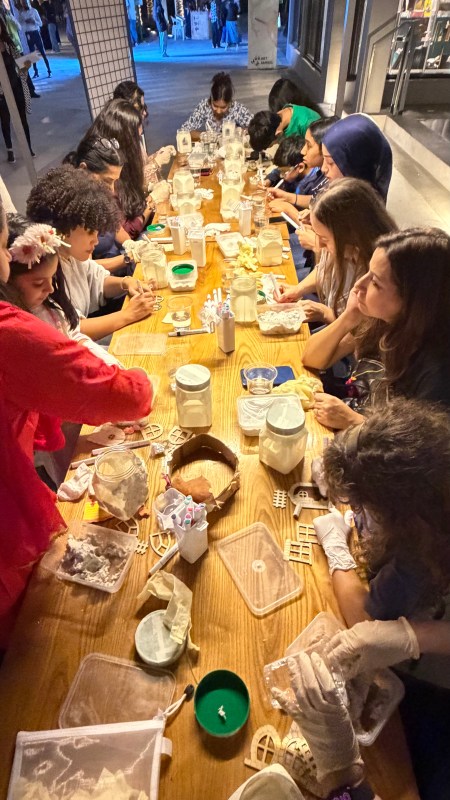
If the material is too fragile, too sharp, or too complicated to handle, I let it go immediately. Then I experiment quietly in my home studio. Just a messy table, jars, plastic bottles, threads, unfinished artworks, paper-mâché, sometimes a design that collapses halfway. I test drying time, I test glue durability, I see if the structure holds or if it creates frustration. I don’t launch a collection unless the process is repeatable, safe, and emotionally calm.
Another part of my fieldwork is observation, I watch children and families interact with the materials. How they work with jars, where they lose patience and when they suddenly start smiling. These tiny human signals tell me more than any sustainability lecture ever could.
Finally, I sit with the materials. I spread them on the floor of my studio and brainstorm, If they suggest a story, a function, or a tiny world, I move forward. If they don’t immediately spark my imagination I respect that and wait.
Sustainable art for me is not about forcing transformation; it’s about allowing a material to transform when it’s ready.
That’s what my fieldwork looks like: quiet observation, repeated experiments, honest failure, and the patience to let the materials speak before I do.
Could you share a particularly challenging moment you faced while pursuing sustainability and how you overcame it?
One of the most challenging moments I faced while pursuing sustainability was when I realized I had crossed the line between collecting and hoarding.

In the early days, I saved almost everything jars, cardboard, plastic, broken decorative pieces. But soon, my home studio stopped looking like a creative space and started looking like recycling storage room. There were bags of materials everywhere.
I felt overwhelmed and paralyzed. I wasn’t designing, I was drowning in different materials. The turning point came when I sat on the floor one day, surrounded by materials, objects and unfinished artworks. That moment taught me something I remind myself of all the time: Sustainability without intention becomes clutter, not art.
I overcame that by changing how I choose materials and how I design with them.
Now, I don’t just ask, Can this be recycled? I ask, “Can this become something people will want to have, use and keep?”
Design became the filter. When I create a lamp from water bottles and paper-mâché, I don’t try to hide its recycled background. I design the piece so its origin becomes part of the story:
- The curve of a bottle becomes the gentle shape of a lamp.
- The texture of paper-mâché becomes a skin full of fingerprints and process.
The visual identity matters. If the design is beautiful, functional, and emotionally warm, people don’t see trash they see something worth living with. I also learned to refuse materials that fight against that process.I don’t force transformation; it has to feel natural. That difficult moment reshaped everything: quality over quantity, meaning over guilt, and design over chaos. It taught me that sustainability isn’t defined by how many objects you save, but by how beautifully and honestly you bring the right ones back to life.
What causes are you most passionate about, and how do you actively contribute to them?
I’m most passionate about three interconnected causes: reusing materials, creative education, and emotional well-being through art. Each one comes from lived experience, not a theoretical idea.
- Reusing materials and giving them a second life
I’m deeply drawn to the idea that objects do not lose their value just because their first purpose is finished. When I create floor lamps from water bottles, or tiny houses from jars, I am not just being eco-friendly, I’m giving materials a new identity.
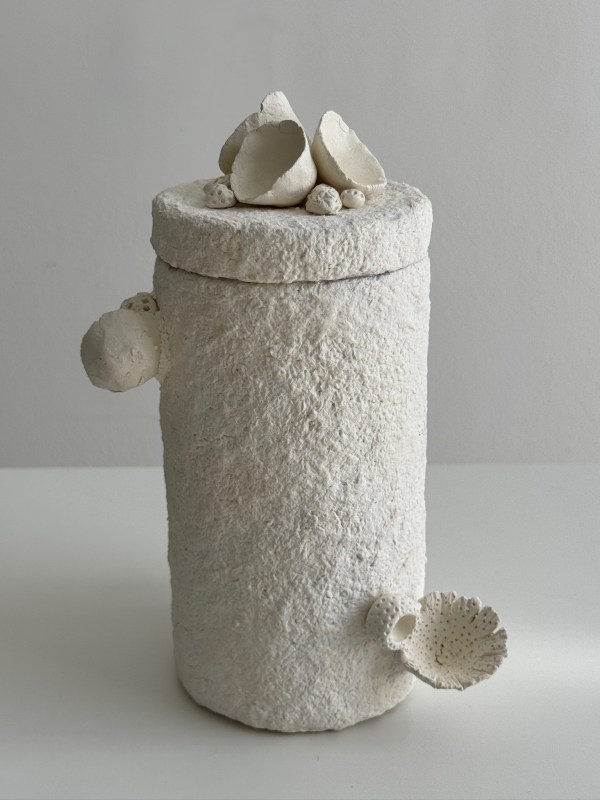
I want people to see potential where they normally see waste.
My contribution is very direct:
- I design artwork and products starting from what already exists, not from buying new supplies.
- I work with textures and imperfections to highlight the history of the material rather than erase it.
- I show children and adults how to transform everyday items into meaningful objects rather than throwing them away.
It’s more about changing how we treat the materials already in our hands.
- Accessible creative education
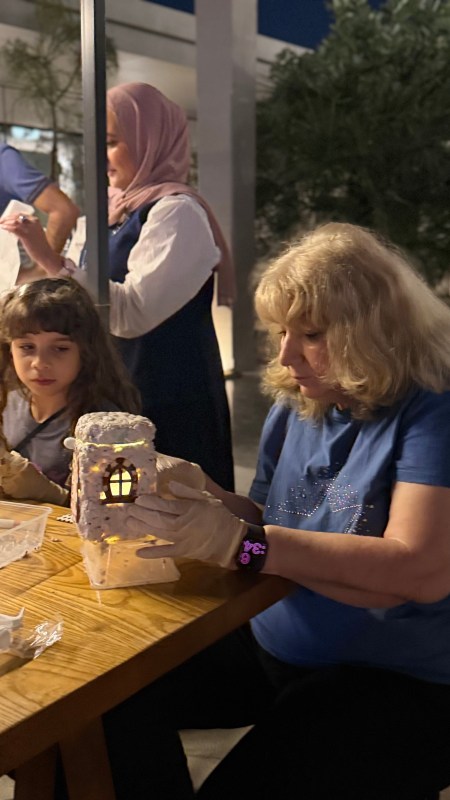
I’m passionate about helping people especially children discover their own creative ability. Many kids grow up believing art is a talent someone is born with. I design experiences that prove the opposite: creativity is a skill, a muscle, and a way of seeing the world.
I contribute by:
- Designing workshops and kits that are simple, tactile, and child-friendly
- Turning jars and plastic bottles into projects they can complete and be proud of.
- Teaching through doing, not lecturing
The moment a child says, I made this from nothing, they are actually learning: I can create from what I already have.
- Art as emotional grounding
Art isn’t just visual for me it’s therapeutic. Working with recycled materials forces a slower pace: paper-mâché dries in its own time, shapes evolve gradually, and nothing is rushed.
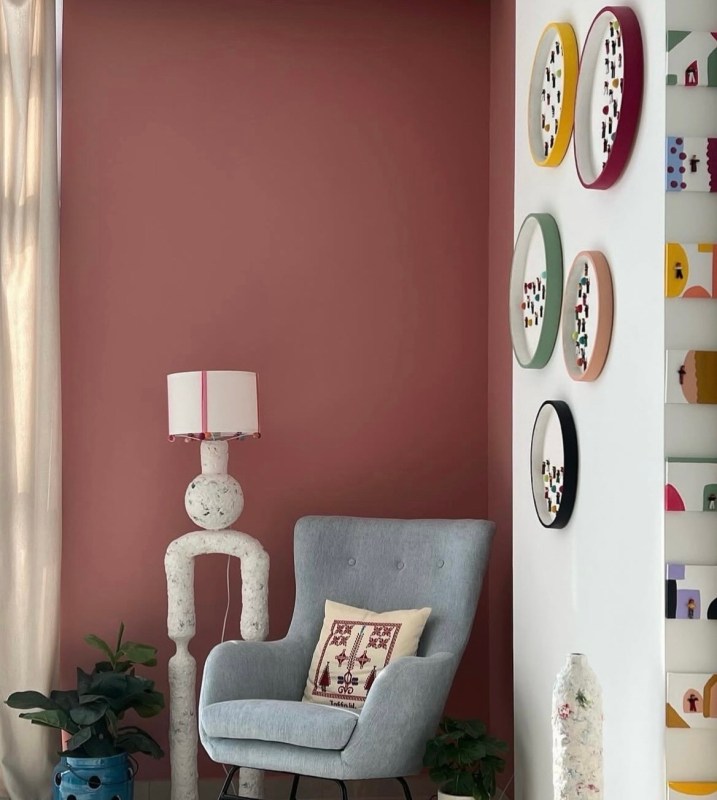
I contribute by integrating art therapy principles into my work:
- Offering workshops where the goal is expression, not perfection
- Encouraging people to sit with materials, be patient.
- Allowing mistakes to become part of the texture and story
I’ve seen adults and children find calm working with paper-mâchè and painting tiny wooden accessories like tiny doors and windows and parents reconnect with their kids over a simple craft.
Reusing materials, creative education, and emotional grounding are not separate causes in my life. They form one ecosystem: when you teach someone how to transform a discarded object with their own hands, you empower them to think differently about their daily material use, their home, and their world.
How do you involve your friends, family, or community in your sustainability efforts?
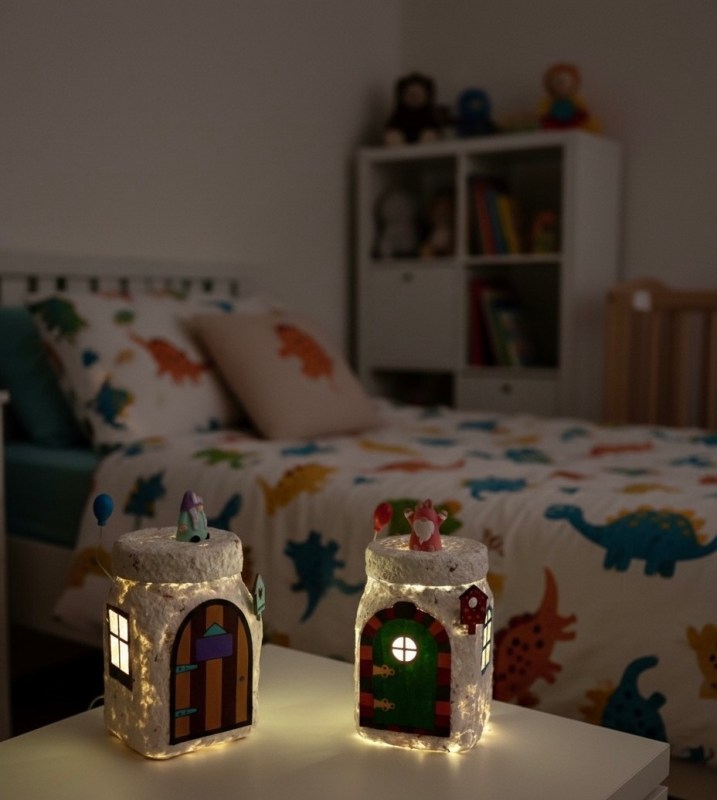
My friends and family are my first collaborators. Before I launched the kit , I took their opinions and let the kids try the kit themselves and watch how they interact with it. Not as artists as ordinary people who might be tired, busy, impatient, or curious. If they struggles with taping a jar, or says, this step makes me anxious, I know it needs to be redesigned. Their reactions are honest and unfiltered, and they help me shape the process so it’s simpler, and more accessible.
After that, everything becomes much more grounded. My sustainability efforts happen in the work itself in how I design and how I solve problems. Where the community truly gets involved is during workshops. That’s where real improvisation happens. Sometimes a wooden accessory breaks, or a jar lid disappears.
Instead of stopping the session or apologizing, I turn it into a creative exercise:
- What can this piece become instead? Can we turn it to something new?
- How can we redesign the piece with the broken items?
These small moments are far more meaningful than any perfect plan they turn sustainability into a living process, not a set of rules. I don’t force participation, and I don’t present myself as someone who has all the answers. I invite people into the uncertainty of making. Sometimes we adjust the process and sometimes the final piece looks different from the original idea and that’s the beauty of it.
Sustainability becomes real when it’s flexible, creative, and discovered together.
As you look forward, what does a “fully sustainable art career” look like to you? Is it about the materials, the message, or the way the art is sold and distributed?
For me, a fully sustainable art career isn’t just about choosing recycled materials or using the right buzzwords. It’s about building a practice that I can live with for many years.

When I imagine a fully sustainable career, the first layer is materials. I don’t want to rely on brand new supplies when there are objects and materials already around us and we can turn them into art with stories and characters. But materials are not the whole story. A sustainable career also means the message.
I want my art to show people that reuse is not a second class choice. I want someone to look at a lamp made from water bottles and say, I would put this in my home, not only because it’s good for the environment but also because it is beautiful and meaningful. If my work can shift people’s perception of discarded objects, then I’m doing something real.
And then there is the most complicated part: how the art is shared and distributed.
I don’t want to mass produce pieces just to satisfy demand. I don’t want to package sustainability into something trendy and lose the soul of the process. A sustainable career for me is built around workshops, small collections, and teaching moments. It means selling fewer pieces, but with a stronger story.
So to answer the question: It is not one of those things it’s the balance between all three.
Sustainability in art is:
- Materials that already exist.
- A message that changes how people see value.
- A way of sharing the work that respects human pace, not consumer speed.
If I can keep those three aligned, even imperfectly, then I know I’m building something that will last not just as a career, but as a philosophy I can stand behind.