

Can you introduce yourself and explain how sustainability became a core part of your life?
My name is Alicia Dauth. I am a proud mother of three children. I am also Chartered Environmentalist with 15 years of environmental experience spanning between my home back in California, USA, Kuwait, Qatar, Zimbabwe, and the UAE.
I began my early career as a Hazardous Materials Specialist, trained by the California Specialized Training Institute – one of the highest levels of training in the nation. It was during this time that I discovered my passion for environmental protection. To deepen my understanding of the natural world, I pursued studies in environmental science and geography. But I did not want to stop there, so I continued to study environmental engineering while working part-time sampling contaminated groundwater wells throughout Southern California and conducting trainings on dewatering activities for the Southern California Edison.

Growing up, I was so inspired by many environmental awareness campaigns and over time this felt like the most ‘natural’ career path for me. Plus, I was born on Earth Day – so it really does feel like it was meant to be. My background may not seem sustainability-focused, but it absolutely is. Environmental sustainability is essential for conserving and maintaining the earth’s natural resources. I have always known it would be a central part of my life.
This passion for meaningful purpose became so strong that I opened a plastic free alternative sustainable living shop in Zimbabwe called, Waste Me Not, Sustainable Living which operated on the mission of supporting the reduction of waste and pollution by prompting alternative and environmentally sustainable solutions. It was a place full of reusable or refillable daily essentials. I sadly had to close the shop, but it remains close to my heart as that project brought the community together and I was able to spread awareness about environmental & waste challenges within the country.
How do you keep yourself updated on the latest information and developments in climate change and sustainability?
I take advantage of various tools offered to me as part of memberships I am affiliated with such as the Institute of Environmental Management (IEMA) and Emirates Green Building Council – just to name a few. I like to be well rounded in my knowledge because I understand the interdependences of the environment – so it is important to understand of many difference themes relevant to environmental sustainability. I fill any gaps with additional online trainings, webinars, conferences a lot of reading. I also rely on LinkedIn to connect with peers to get specific industry insight and learn what others are doing in the sustainability space.
Which Sustainable Development Goal (SDG) do you resonate with the most, and why?
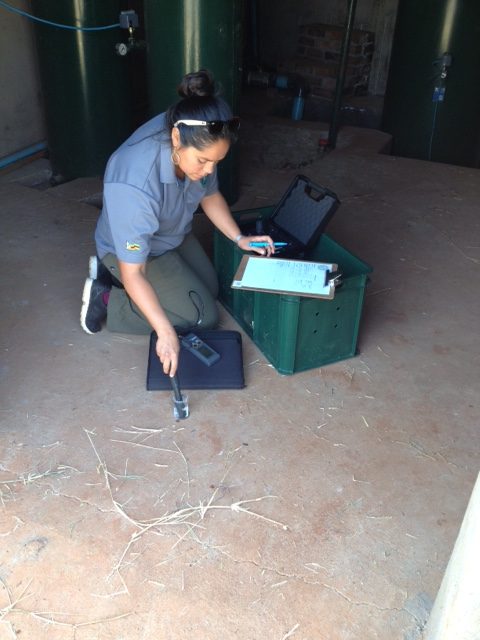
UNSDG 6 Clean Water and Sanitation – because water is essential to achieving all SDGS. Water is central to everything we do, not to mention that it makes up 71% of our earth’s surface. There is a deep thread in which water shares a common goal to achieve, sustainable development because it is quality and abundance can make all the difference in our lives.
We work so hard to ensure it is fit for consumption & use yet we do not always value it they way we should. Let us stop taking it for granted and let us take a step back and understand that water is central to how we exist and function. We cannot make more of it, we can only find efficient ways to manage it and conserve it. We can find more innovative and integrated ways to recover it and treat it, but we cannot ever replace it.
What are your thoughts on climate change and the four key categories of individual emissions? How do you calculate your individual emissions?
Climate change is happening whether we like it or not, whether we believe it are not so the only question we need to ask ourselves is if we are prepared for a changing world? We have all grown comfortable with the world we know today but as we slowly see it slipping away do we realize how much we will need to change with it. The most relevant categories of emissions are water, waste, and energy, as they form the foundation of how modern societies function.
These include:
- Water use and consumption, including losses through leaks.
- Food consumption, food waste, and general household waste
- Energy consumption
I refer to the water footprint calculator because it helps estimate the embedded (or ‘virtual’) water associated with my household activities and consumption.
What innovations or unique practices have you introduced in your daily life that have helped reduce your environmental footprint?
I am not perfect. I do not pretend to be because it can be difficult raising a family and being aware of our environmental footprint along the way, but we do the best we can. As babies my children wore reusable diapers, I drive a hybrid vehicle, we filter our tap water for drinking at home, we use reusable bags in the shops (refill when we can). I shop for second hand clothing before I buy new, we have a water wise garden, I compost food scraps from the kitchen, use energy efficient appliances at home, swap household essential items with products which contain less chemicals. I would not call these innovative practices rather sustainable living.
In what ways do you balance sustainability with your personal or professional goals?
For me, sustainability is both a lifestyle and a mindset. My personal and professional goals are deeply interconnected with what I value in my personal life, and it naturally shapes my work. My professional experiences reinforce my personal commitment to sustainable living. There is no real separation between the two; they drive and inform each other every day and even when I make mistakes or do not always manage to maintain the balance like I hope for I know that it’s better do something imperfectly than to do nothing at all.
Could you share a particularly challenging moment you faced while pursuing sustainability and how you overcame it?
Convenience can often compromise sustainability efforts – this holds true in both professional and personal life. People want results that are quick and affordable, yet also durable or of high quality, or delivered with the highest level of service. This combination of expectations can often lead to disappointment.
For example, a client once approached me to implement their water management plan. It was a great opportunity, but they were not willing to allocate the resources necessary for the plan’s success. This created frustration on both sides – significant effort had already gone into the project, and without the intended resources, the desired outcomes could not be achieved. The situation was eventually resolved through ongoing internal training sessions I conducted. By upskilling current staff, we reduced the need to recruit additional personnel for the project’s implementation.
On a more personal level, I have also turned down services from companies whose practices I do not agree with, or who cannot provide evidence of their sustainability claims. For instance, if a company says it recycles all the waste it receives but cannot provide documentation or receipts to verify this, how can a client be sure that proper disposal occurred? This is why I always make decisions based on the facts available to me – so I can promote and encourage responsible action in others as well. Always ask questions!
What causes are you most passionate about, and how do you actively contribute to them?
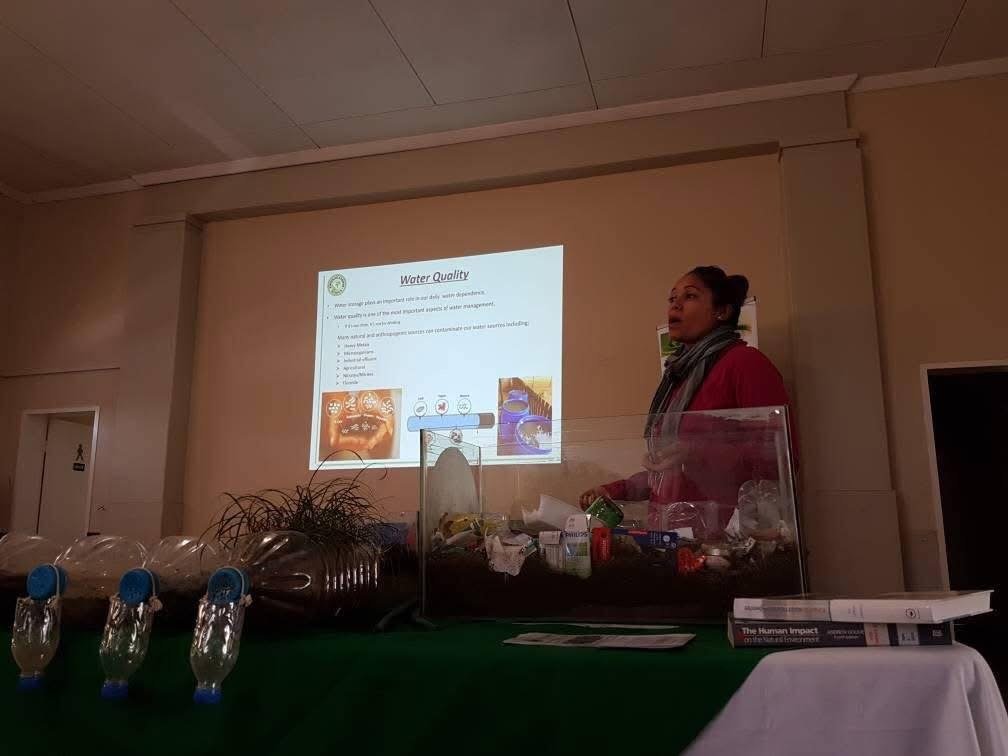
I am passionate about menstrual hygiene, water quality and water accessibility. I support many projects in Zimbabwe surrounding these matters because it is all interconnected. Many ladies and women do not have access to safe sanitary wear, but they take the risk by using unsuitable items (i.e. leaves, rags, mattress stuffing) to control their monthly period. This can lead to many health risks for them. So, I donate approximately 500 a reusable pads a year to women who need it most but then there is the issue of the water quality and accessibly for these reusable pads to be washed. I support when I can with offering handmade soaps to clean their pads and support the rural communities with access to clean water for drinking and washing. I work with many other organisations in Zimbabwe to achieve this as it involves a lot planning to ensure pads and water are distributed equally.
How do you involve your friends, family, or community in your sustainability efforts?
My friends and family are incredibly supportive of my work, and I find ways to involve them along my journey because in the end I do what I do to make a positive difference which I hope will benefit my family, friends, and community. I include them on climate fresk workshops which I facilitate, I encourage them to rethink their choices and hopefully decide to the same. I stive to practice what I preach, I make mistakes along the way and as to quote Mother Teresa “I alone cannot change the world, but I can cast a stone across the waters to create many ripples” and that is what I will keep doing.
As you move forward, what new sustainability goals do you have in mind for the future?
As I move forward in my career, my goal is to inspire as many people as possible – especially when it comes to understanding their water footprint and our hidden dependencies on water – I want more people to be aware of the true value of water. I see great value in giving back by supporting those who are new to environmental sustainability. I want to guide them on their professional journey and share the experiences I have gained throughout my career, so they can appreciate just how diverse and impactful this field truly is. It is rewarding to think that casting even a small stone can create a big ripple.