

When we discuss the UN’s Sustainable Development Goals (SDGs), the conversation often gravitates towards climate action or zero hunger. Yet one goal sits quietly at the centre of the entire framework: SDG 16 – Peace, Justice, and Strong Institutions. Without it, progress on the other sixteen goals becomes fragile, uneven, and often temporary.
It is not just a separate goal; it is the cornerstone. This is the invisible infrastructure that determines whether a nation’s progress is a temporary peak or a permanent foundation.
Without peace, development is paralysed. Without justice, progress is unequal. Without strong institutions, even the best intentions lack a vehicle for delivery.
The Reality in Numbers
The statistics of the last two years reveal a world at a critical juncture. While we often hope for linear progress, the data from 2024 to 2025 paints a picture of increasing fragility that demands a sophisticated response.
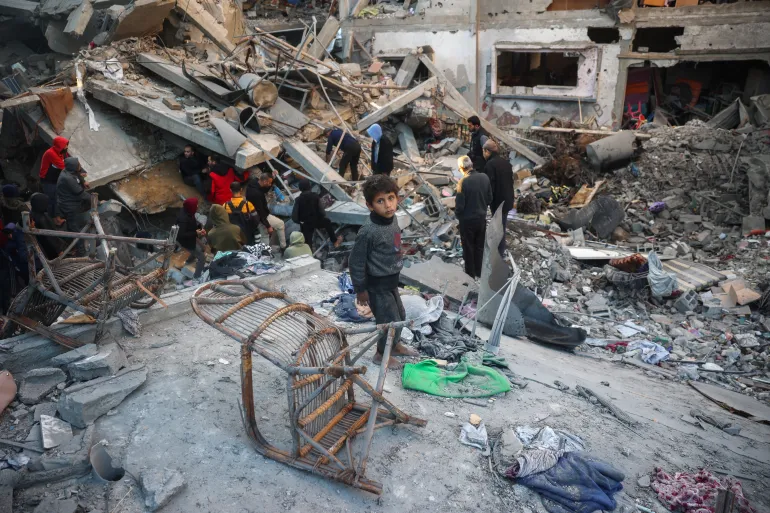
- Conflict Related Deaths: Rose from approximately 162,000 to 240,000. This represents a staggering 48% increase, the highest since the mid 1990s.
- Civilian Safety: Deaths in conflict zones surged by 40%, reaching 50,000 in 2025. This indicates that civilians are increasingly on the front lines.
- Forced Displacement: The number of displaced persons grew from 120 million to 126 million, driven by the intersection of conflict and climate instability.
- Inclusive Governance: Representation of women in parliament saw only marginal growth, rising from 26.5% to 27%, highlighting a persistent gap in decision making.
The jump in violent event fatalities from 162,000 in 2024 to 240,000 in 2025 is not just a number. It represents a systemic breakdown in the international community’s ability to settle disputes through institutions rather than arms.
When civilian deaths are rising faster than those of combatants, it means the systems meant to protect people are no longer holding. The “strong institutions” designed to uphold international humanitarian law are failing where they matter most, at the point where human lives should be safeguarded, not sacrificed.
Building Resilience: The Role of Strong Institutions

A strong institution is often mistaken for a building or a set of laws. In 2026, resilience is something far more dynamic: the ability to sustain everyday life even under extreme pressure.
Technological sovereignty is now central to institutional strength. For countries at global crossroads, resilience means protecting both physical and digital civilian spaces. The ability to counter aerial or cyber threats is a practical expression of SDG 16. Keeping schools open, businesses running, and communities safe. National security, in this sense, becomes a public service that preserves peace and stability.
Digital integrity is equally critical. Highly digitised states have redefined continuity of governance. When crises occur, institutions don’t stop, they adapt. Smart courts, digital identities, and remote services ensure that justice, administration, and public services remain accessible regardless of location. At the same time, trusted official platforms acting as a single source of truth help counter misinformation, a key driver of instability.
Finally, economic resilience depends on institutional trust. Transparent governance and reliable legal systems create a “safe harbour” for citizens and investors alike. Recent years show that capital doesn’t avoid risk altogether, it flows to countries where institutions can manage it fairly, consistently, and predictably.
A Shared Responsibility
SDG 16 reminds us that peace is more than just the absence of conflict. It is the presence of a system that works for everyone. Whether it is through providing humanitarian aid to those affected by global crises or ensuring the efficiency of daily public services, the goal remains the same. It is about building a society where stability is the norm and progress is protected.
Ask yourself: Does your organisation or community treat stability as a given, or as a value to be protected?

- Demand Institutional Accountability: Support initiatives that increase transparency in local governance. Progress in Target 16.6 (effective, accountable, and transparent institutions) begins with public demand for clear data.
- Protect the Information Ecosystem: In a world where 60% of conflict-related deaths are preceded by a surge in disinformation, protecting the integrity of facts is a direct contribution to global peace.
- Invest in Resilience: Whether you are an individual, a business leader, or a policymaker, prioritize systems that can withstand shocks.
We are currently spending 11.6% of global GDP on the economic impact of violence. Imagine if even half of that resource was redirected toward the other 16 SDGs.
Peace is expensive to build, but the cost of its absence is a price we can no longer afford to pay. Will you wait for the next crisis to value the institution, or will you strengthen the foundation today?