

When we think of war, we think of the immediate, heartbreaking human toll. But in the first weeks of March 2026, a second, “invisible” frontline has emerged: our planet’s atmosphere.
Reports from The Guardian (March 2026) and the Conflict and Environment Observatory (CEOBS) highlight a significant surge in carbon emissions and ecological degradation following recent escalations in the Middle East. For those committed to sustainability, these events represent a critical challenge to the United Nations Sustainable Development Goals.
The Staggering Numbers of Destruction
Quantifying the ecological footprint of conflict is complex, yet environmental monitors provide essential data to understand the scale of the damage. According to research cited by the Social Science Research Network (SSRN) and CEOBS regarding modern high-intensity conflicts, the carbon cost is immense:

- Atmospheric Carbon: Estimates suggest that the first few weeks of intense regional conflict can produce upwards of 5 million tonnes of CO2 equivalent, a figure that exceeds the annual emissions of many developing nations.
- Infrastructure Destruction: The demolition of urban areas contributes roughly 2.4 million tonnes of emissions due to the “embodied carbon” in concrete and steel being released and the subsequent energy required for reconstruction.
- Industrial Fires: Damage to fuel storage facilities and refineries creates black rain events, where soot and particulates settle on agricultural land, damaging soil health for years.
- Logistical Footprint: The movement of heavy machinery and long-range transport accounts for over 500,000 tonnes of CO2, often exempt from standard national climate reporting.
Alignment with Sustainable Development Goals

The current situation in the Middle East creates significant barriers to achieving the 2030 Agenda for Sustainable Development:
- SDG 13: Climate Action: Every refinery fire and missile launch is a “carbon bomb.” The conflict is hard-wiring another generation of fossil fuel dependence as countries scramble to secure energy supplies, bypassing green transitions.
- SDG 6 (Clean Water and Sanitation): Damage to desalination plants and water treatment infrastructure in arid regions leads to immediate water scarcity and the potential for long-term groundwater contamination.
- SDG 15 (Life on Land): Toxic residues from munitions and industrial leaks lead to habitat destruction, affecting biodiversity in some of the world’s most fragile desert ecosystems.
- SDG 11 (Sustainable Cities and Communities): The destruction of urban infrastructure forces a reliance on emergency, carbon-intensive energy sources, setting back urban sustainability by decades.
The Sustainability Perspective: Peace as a Planetary Requirement
From a sustainability perspective, conflict pushes us backwards. Time, funding, and attention that should be driving clean energy and resilient systems are instead spent repairing what war has destroyed. At the same time, instability deepens our dependence on fossil fuels, locking in the very systems we are trying to move away from.
What we are witnessing in the Middle East is a sobering reminder that we cannot meet our 2030 sustainability goals while nature is treated as collateral damage. Every explosion leaves a footprint in the air we breathe, the water we drink, and the land communities rely on. In this way, modern warfare directly undermines both climate action and the foundations of peace and justice.
The fires burning today are more than symbols of conflict, but rather, they serve as warnings. A healthy planet cannot exist without stability, and environmental protection cannot survive in the absence of peace. Peace is not only a moral responsibility to one another; it is a basic requirement for a liveable climate and a future we can all share.
A Call for Peace: For People and the Planet
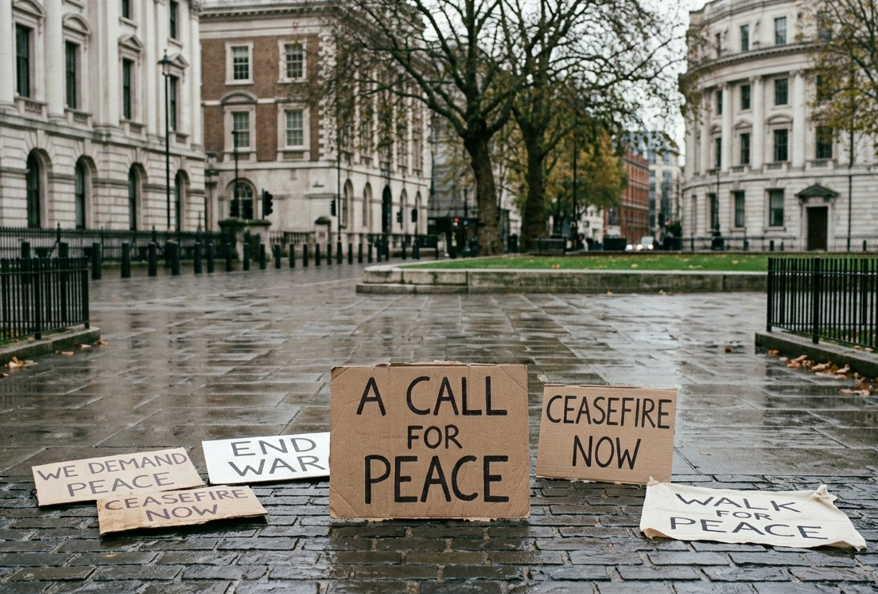
Peace must no longer be treated as a political ideal alone, but as an environmental imperative. Every ceasefire protects more than lives and cities; it safeguards air, water, soil, and the fragile systems that sustain all of us. In a world already pushed to ecological limits, war accelerates collapse in ways that no reconstruction effort can fully undo.
If we are serious about climate action, justice, and a livable future, then peace must sit at the centre of sustainability conversations; in policy rooms, boardrooms, and global forums alike. Choosing diplomacy over destruction is one of the most powerful climate decisions humanity can make.
The planet cannot afford endless battlefields. Neither can we.
To protect our shared future, we must advocate not just for lower emissions, but for an end to the conflicts that ignite them. Peace is climate action, and it is the most urgent one we have.